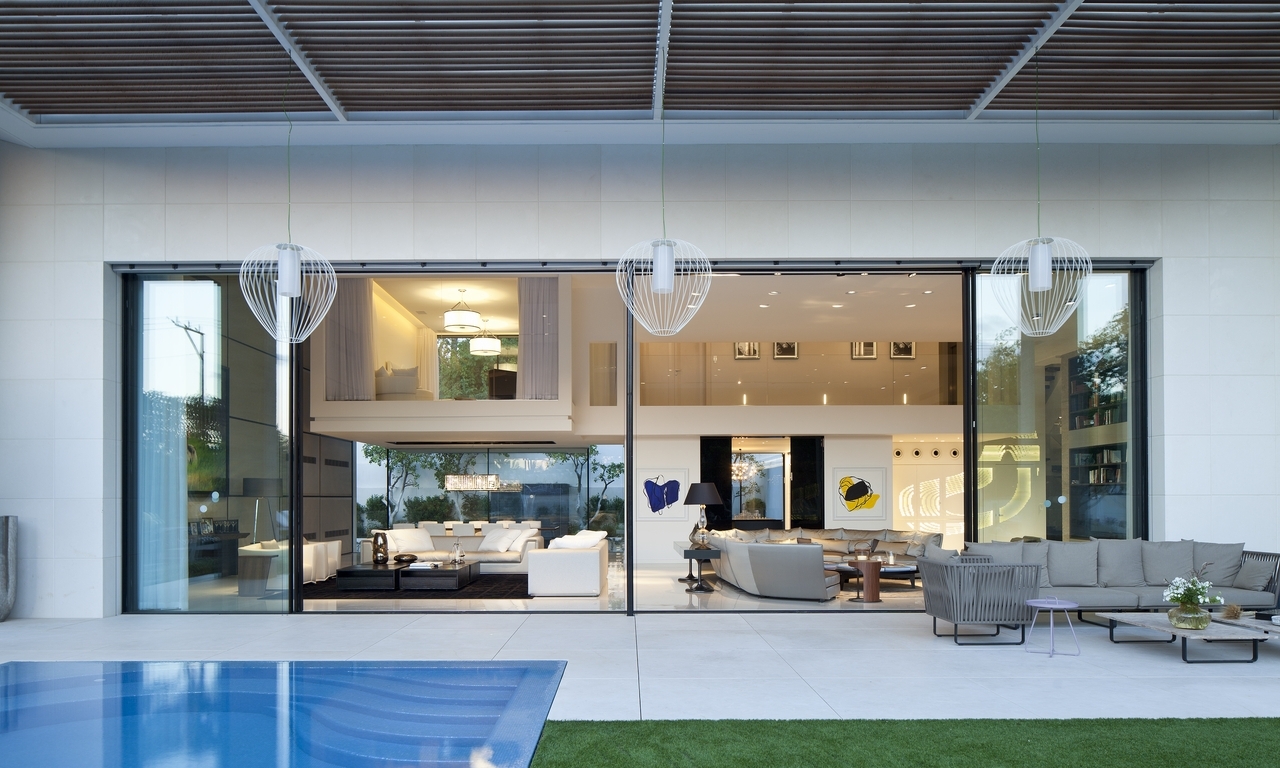

When architecture is built on light, views and clean lines, choosing windows is not a secondary technical decision. It is part of the composition. Slim-line sliding windows play exactly this role: they reduce the visible profile, maximise the glass and serve a minimal aesthetic without compromising comfort, security or performance.
In high-end homes, villas, boutique hotels and renovations with a strong architectural identity, a slim-line system isn't chosen only because it looks refined. It's chosen because it changes the experience of the space. The opening becomes more discreet, the transition between inside and outside more natural, and the whole picture calmer, more precise, more contemporary.
What slim line really means in sliding windows
The term is often used loosely, but a premium project needs more precision. Slim line doesn't just mean “thin profile”. It means carefully engineered aluminium geometry, limited visible sections, large glazed areas and the right mechanical support so the system stays stable, quiet and reliable in daily use.
That's the heart of it. A truly advanced slim-line sliding system can't just look impressive in the showroom. It must work consistently with large sashes, withstand high wind loads, offer thermal insulation that matches the level of the project and keep the elevation clean without visual compromise.
This is where the quality of the system's design and the technical knowledge of your partner are decisive. The more minimal a window is, the less room there is for carelessness.
Why slim-line sliding windows dominate contemporary architecture
Contemporary luxury architecture calls for clean surfaces, large transparent zones and detail that doesn't shout. Slim-line sliding windows answer exactly that need, letting the glass take centre stage while the frame recedes.
This has practical as well as aesthetic value. In a home with an open view, a slim-line system limits visual intrusion. In a hotel, it enhances the sense of openness and light. In a high-end renovation, it modernises the building envelope without weighing down the architecture.
There is a second, less obvious dimension that matters just as much. The simpler the line, the more paint quality, joint precision, smooth rolling and consistent detailing stand out. Slim line hides nothing. It exposes the quality of the system at every point.
The value of large glazing
Large glazing is not just about looks. It affects daylight, the connection with the outdoors and the sense of scale. A living room with large sliding surfaces feels more open, calmer and architecturally richer.
Of course, more glass means more demanding design. The right glass, the thermal break, the sealing and the strength of the mechanisms are not details for the end. They are the core of the system's performance.
Minimal aesthetics need technical discipline
In premium projects, minimal aesthetics forgive no mistakes. A poor alignment, weak rolling or a rough joint spoils the result at once. That's why slim-line sliding systems require rigorous design, proper fabrication and precise installation.
A discreet profile is only a success when it comes with structural adequacy. Otherwise the slim frame becomes a technical risk rather than an architectural advantage.
Where quality is judged in a slim-line system
The first element is the section. Visible lines must be truly limited, but not at the expense of stability. The second is the rolling mechanism. In a high-end system, movement stays silent and controlled even with heavy sashes.
The third is thermal and acoustic performance. Many people are impressed by how a slim-line window looks and only check its performance later. The right order is the reverse: first assess the system's technology, then its aesthetic execution, because a luxury opening must work flawlessly in January and in August.
Sealing is just as critical, especially by the sea or in buildings very exposed to wind. An impressive opening without real protection from air and water quickly loses its value in practice.
Slim-line sliding windows and project customisation
No single slim-line system suits every project in the same way. A villa opening fully onto its garden, a design-led city apartment and a heavily used hotel all have different needs. The right system comes from combining the architectural goal, opening sizes, required performance and daily use.
This is where a consultative approach makes the difference. Sash widths, the visible section you want, the need for recessed solutions, security requirements, orientation, microclimate and the finish level the architect or owner expects all need to be assessed.
In a truly premium result, the system isn't picked from a price list. It is specified.
Finishes carry architectural weight
In slim-line windows the finish is crucial, because the aluminium stays clearly visible in small but highly exposed lines. Paint, texture, uniformity and tone must serve the project's overall concept.
Matt shades, metallic finishes, special textures or options that work with stone, wood and concrete can elevate the result, as long as there is consistency. Slim line is aesthetically powerful, but it doesn't like excess.
What to check before the final choice
The most common trap is judging only by photos or a first impression. In this category, the experience of use matters almost as much as the look. How the sash moves, how it locks, how it sounds, how it meets the floor, how clean the meeting points are: all of this determines the final level.
It's also worth checking whether the supplier can support the project early, at design and detailing stage. Slim-line systems interact with floors, shading, tracks, recesses and cladding. If decisions are made late, forced compromises often follow that affect both look and function.
Another often underestimated point is maintenance. Premium quality doesn't mean a system needs no care. It means that, when properly designed and installed, it keeps its behaviour and elegance in a predictable, controlled way over time.
Why the right partner matters
With slim-line sliding systems, product technology is only half the equation. The other half is your partner's ability to turn an architectural intention into a working solution. That means understanding the project, accurate measurements, the right technical proposal, clear communication with the architect and persistence in detail.
At this level, experience isn't a marketing slogan. It shows in the questions asked from the start, in details foreseen before they appear on site and in the ability to support the project consistently from first sketch to final installation. That's why a specialist company like HAUFEN® Aluminium Frames values not only the system but also the process of choosing it.
Slim-line sliding windows aren't a passing trend. They express a more mature architectural approach, where technology serves quiet luxury, views, light and precision. If your project calls for clean lines without technical compromise, the right choice isn't the “thinnest” frame, but the system that makes simplicity look completely natural.